

Help center
Enter and pay a bill
Record what a vendor is charging you, keep track of when it is due, and mark it paid when you send the money. Bills are for amounts you owe later. If you already paid for something, record it as an expense instead.
Before you start
You need a vendor. If they are not in your books yet, add them while you enter the bill (step 2), or open Contacts and select New contact.
Enter the bill
- Select Bills in the sidebar, then select New bill. The three figures at the top of the Bills page show what is due in the next 7 days, what is overdue, and what is still a draft.
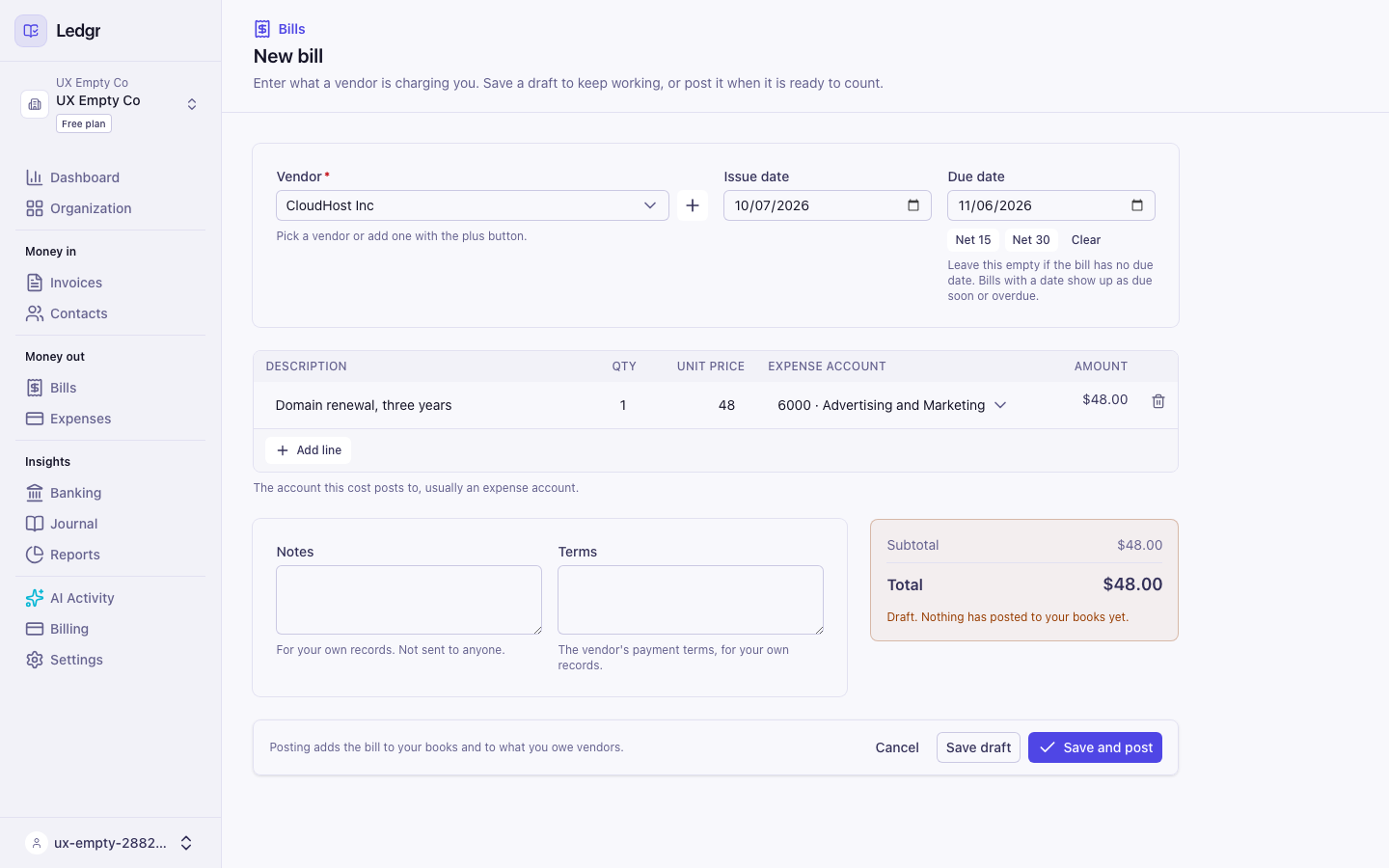
- Choose the Vendor. Type to search. If they are not listed, select the plus button beside the field, enter a name, and select Create. To start a bill from a vendor's own page, open Contacts, open the vendor, and select New bill. The vendor is already filled in.
- Check the Issue date. It starts as today. Use the date printed on the vendor's bill.
- Set the Due date, or leave it empty. Select Net 15 or Net 30 to set the date that many days after the issue date.
- Fill in the first line. Describe the charge, enter the Qty and the Unit price, and choose the Expense account. The expense account is the category the cost belongs to, such as Software or Office Supplies. Select Add line for more.
- Add Notes or Terms if you want them. These stay with you. They are not sent to the vendor.
Save a draft, or post it
- Save draft keeps the bill so you can finish it later. A draft is not in your books yet and does not count toward what you owe.
- Save and post saves the bill and adds it to your books in one step. Bookledo asks you to confirm first. Once posted, a bill is final. To correct it, void it and enter a new one.
After posting, the bill shows Open. Select Pay bill to pay it now, or come back when it is due. The Bills list, the dashboard, and your reports update without you reloading the page.
To post a draft later, open it and select Save and post, or open the Actions menu on its row in the Bills list and select Post. A draft you no longer want can be deleted from More on the bill.
Pay the bill
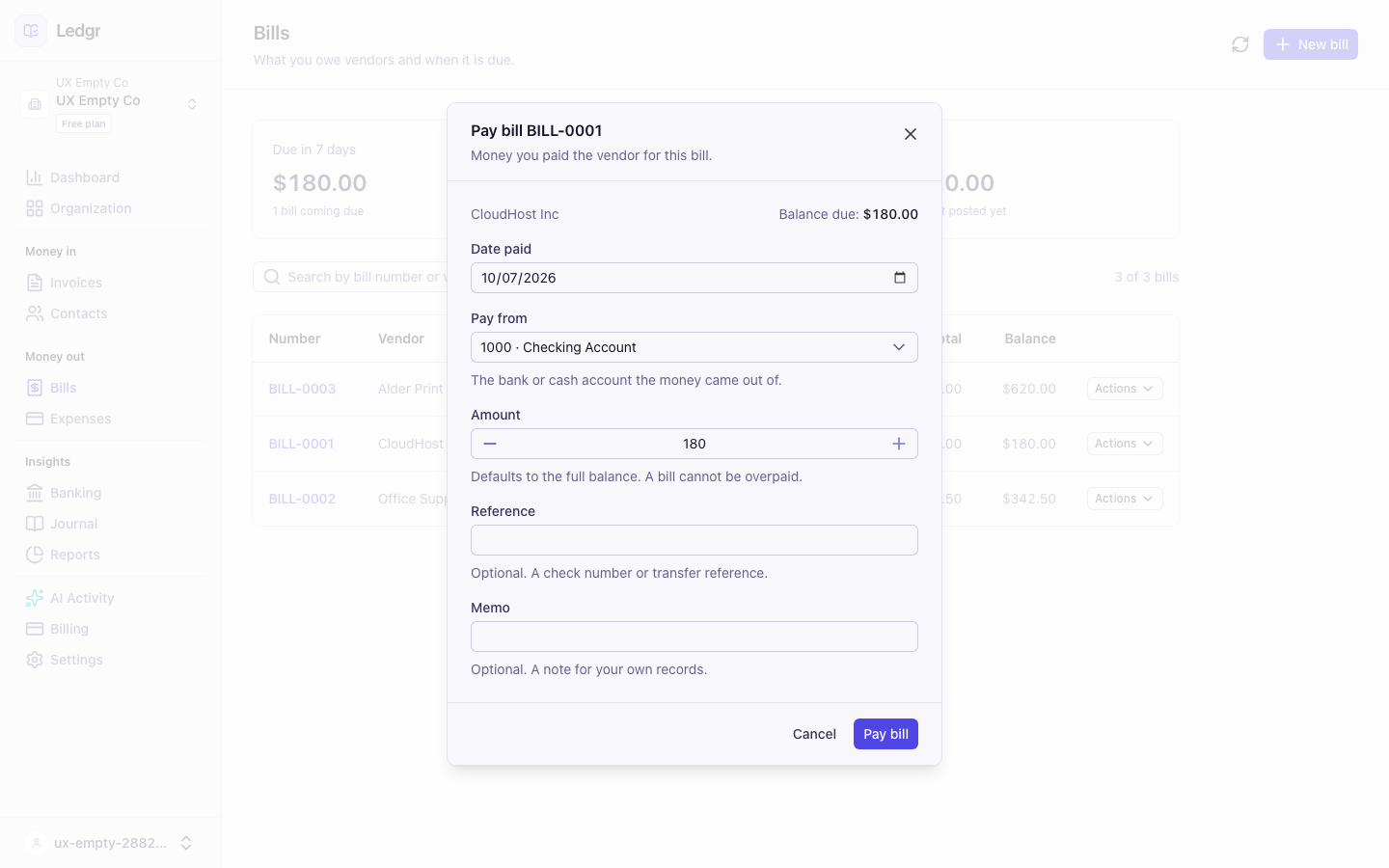
- Open the bill and select Pay bill. You can also open the Actions menu on the bill's row in the list and select Pay bill.
- Check the Date paid and the account it was paid from, such as your checking account.
- The Amount starts as the full balance. Enter less to pay part of it. A bill cannot be overpaid.
- Add a Reference, such as a check number, if you like.
- Select Pay bill.
The bill shows Partially paid or Paid, and a message tells you what is still left to pay. The payment appears under Payments on the bill.
See what is coming due
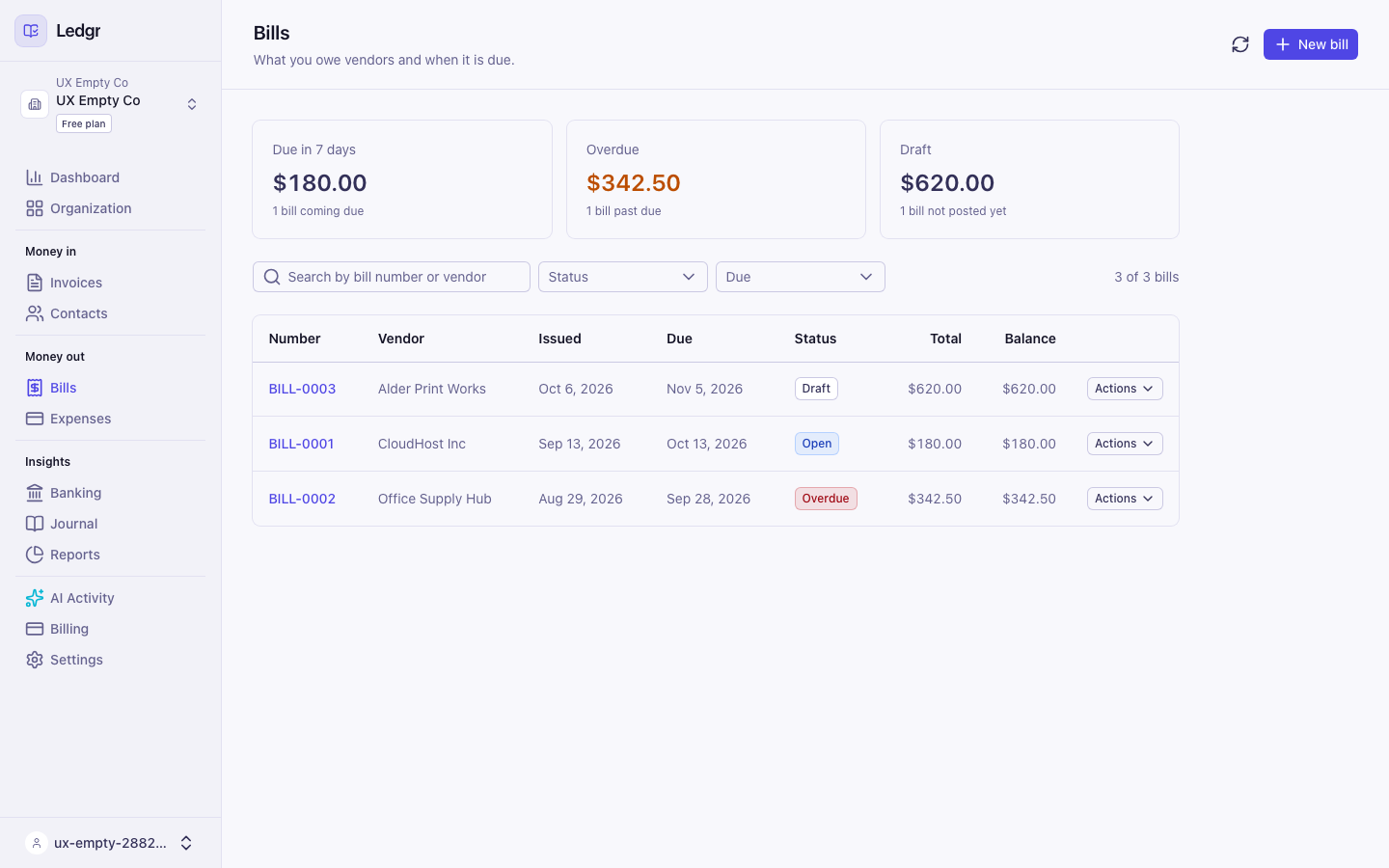
- Select Due in 7 days to list the open bills coming due this week. Select Overdue for the ones already past their due date.
- Search by bill number or vendor, or filter by Status or Due. Select Clear to remove the filters.
- If a search finds nothing, the page says No bills match these filters and offers Clear filters. If the list cannot load, the page says so and offers Retry.
Copy, correct or cancel a bill
- Duplicate makes a new draft with the same vendor, lines, notes and terms, dated today. It is in More on the bill.
- Void takes a posted bill out of your books and every report. It cannot be undone. A bill that has a payment on it cannot be voided. Void the payment first.
Next steps
Create and send an invoice. Run your reports to see what you owe vendors in the AP aging report.